

CRABSHARK!
how making up games helps you make films
I love games. I love turning real life into games. I love turning boring chores into games. I love playing game-games. I even love making games.
Growing up with three siblings, games are a huge part of what I do. Probably to a ridiculous extent. Once my youngest brother and I both sunburned the inside of our armpits, on the same arm, because we spent so long at the beach throwing stones into a cup in a very precise, predetermined order.
When I talk about games I don’t solely mean competition. Yes, I am competitive. Yes, I will sometimes pretend I’m in a race with a person who has no idea of my existence whilst I’m walking down the street. But this isn’t about competitiveness. This is about games and creativity.
I think games are an absolutely essential part of interacting with the world - and a really vital element of storytelling.
When my daughter was young we decided to make our own board game, because we didn’t want to play the ones we had. She was very young, possibly three. We just got a big piece of paper and started thinking about what the game could be. We made squares, decided you needed a dice to roll along, and then decided to make the bad bits in the game crabs and sharks - because she wasn’t fond of crabs back then. It made sense that if you got pinched by a crab you missed a turn, and if you got eaten by a shark you went back to the start.
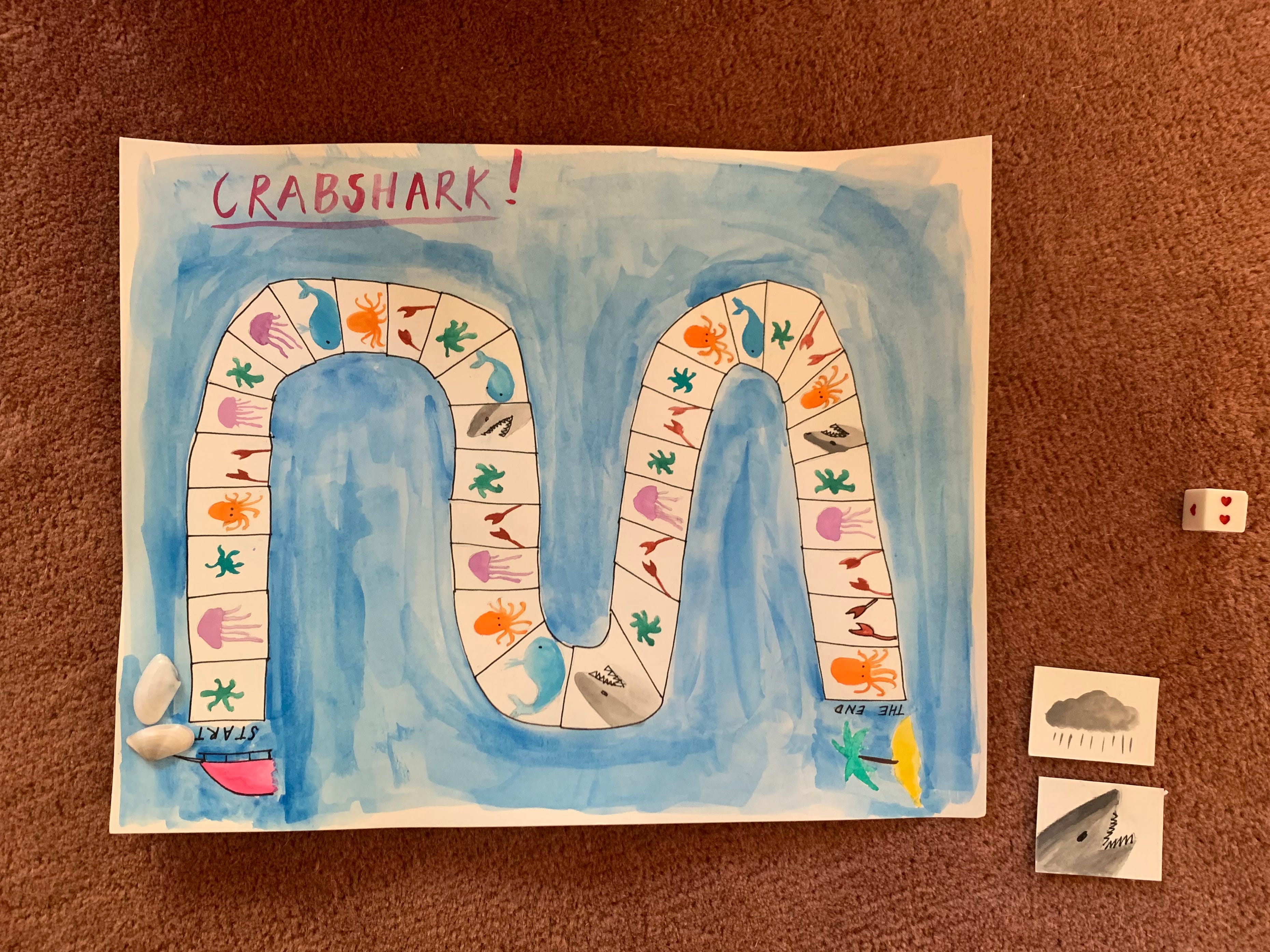
We made it a little bit of a story: your boat had shipwrecked and you had to get to the deserted island. You could only do that by jumping on different things floating in the sea;
an octopus
some seaweed
If you jumped on a shark, back to the beginning. If you jumped on a crab, he pinched you, held on, and you missed a go. And if you were lucky and jumped on a whale, it spout-powered you forward to the next whale.
After we’d drawn it out and tested it for a bit, we realised it was a little too simple, and that you needed a few other elements. She went to bed, and I decided to paint it all to make it look good. The other elements we added - which turned this game from quite fun, and a bit too hard to actually finish, into something demonic that makes you question your own place in the world - were:
a shark card, a crab card and a weather card for each player
The shark card sends the other person back to the beginning, even if they were one square from the end. A crab pauses them, so you could catch up. Weather makes them slip backwards a spot — almost always into a shark, and back to the beginning.
A game that’s only about 40 squares long usually takes about 30 minutes to finish, by which point you are cursing, laughing, and wondering whether you shouldn’t have made a more solvable board game.
Thinking of that game, and others like it, and using that part of my brain, has always helped me massively with storytelling. It's world-building. It's storytelling in its most refined, simple sense. You want somebody to get the rules of the game immediately and start finding their own, personalised way in.
It feels similar to when I’m making my Little Scraps of Paper films. Watching someone work out the rules of their own world and find the play inside them.
I’ve written before about giving people gateways into your story. That information you load them up with at the start of a film - and how you release it to them at crucial points - is you giving them the tools to navigate this world you’re building, this world you’re exploring.
A game feels like a discovery you’re inside of. There’s an elegance and a self-teaching to them. There’s a sense of wonder as it happens, as you become part of it.That feeling should permeate filmmaking.
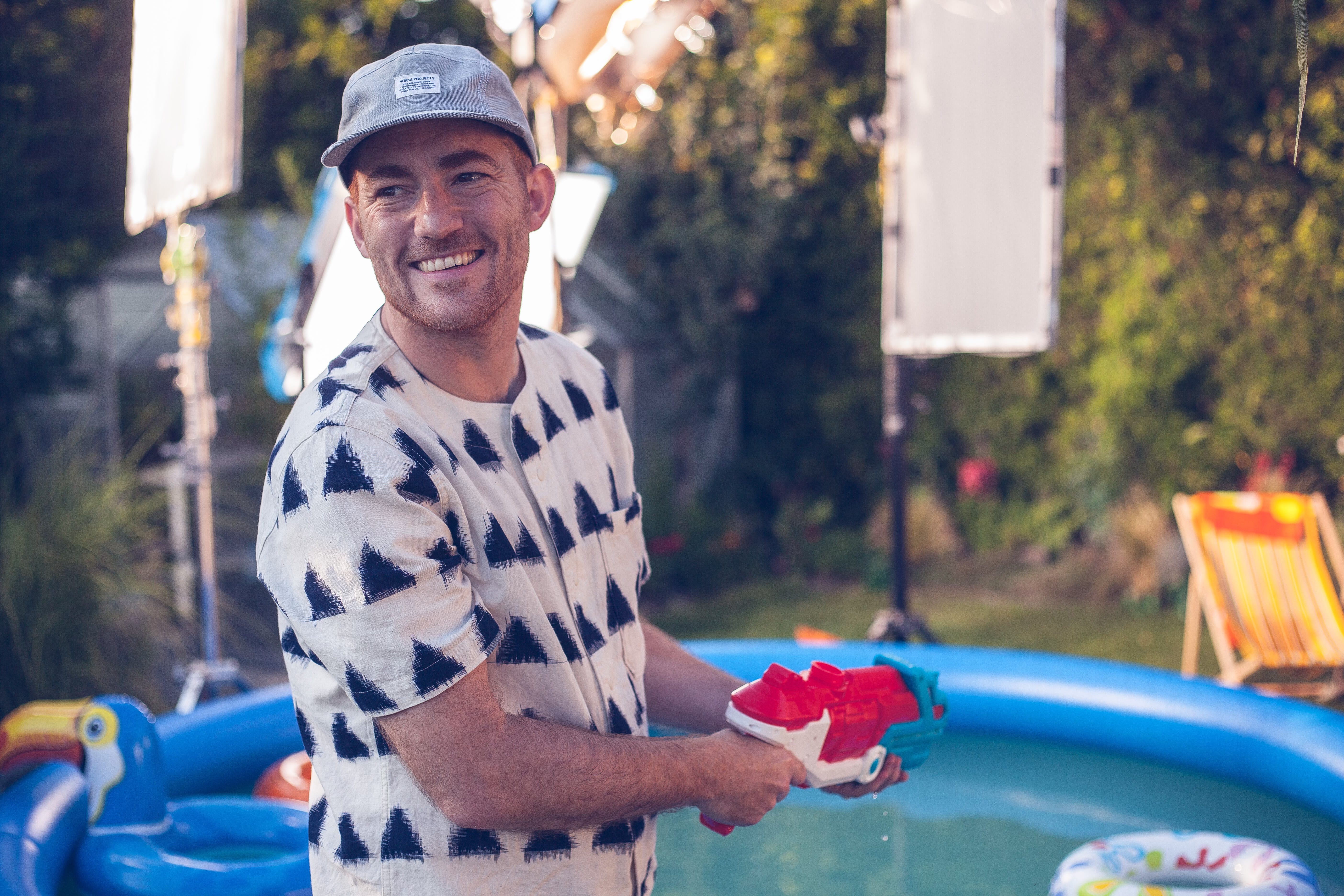
On set, I like to maintain that sense of playfulness and invention. Look - here’s me looking about as happy as I ever look, because I happen to be holding a giant water pistol on set. I’m not really sure why I’m holding a water pistol on set, but it certainly made it joyous. And to me, a set should be a joyous place.
For me, games are an even better starting place than the written word for helping children begin creating their own stories. They have all the same elements world-building, a narrative arc, a goal, challenges and obstacles - and they’re sometimes less encumbered with narrative constraints than writing or story invention is. After all, that’s why children’s books are so hard. The simplicity of language combined with the depth of idea is extremely hard to pull off.
And the benefit of playing games with kids and adults together is that you can get more loose with the rules. Which leads you to inventive places.
Like last Christmas, when we were watching a quiz show on television with my daughter’s Spanish granddad, who’s a little bit deaf. I was whispering the answers to my daughter, who would then shout them out loud as if she’d got them right, and kept getting very impressed nods and well-done’s from her granddad.
Now, trivia isn’t really a game so much as a mental challenge - but you can make your own game version of anything.
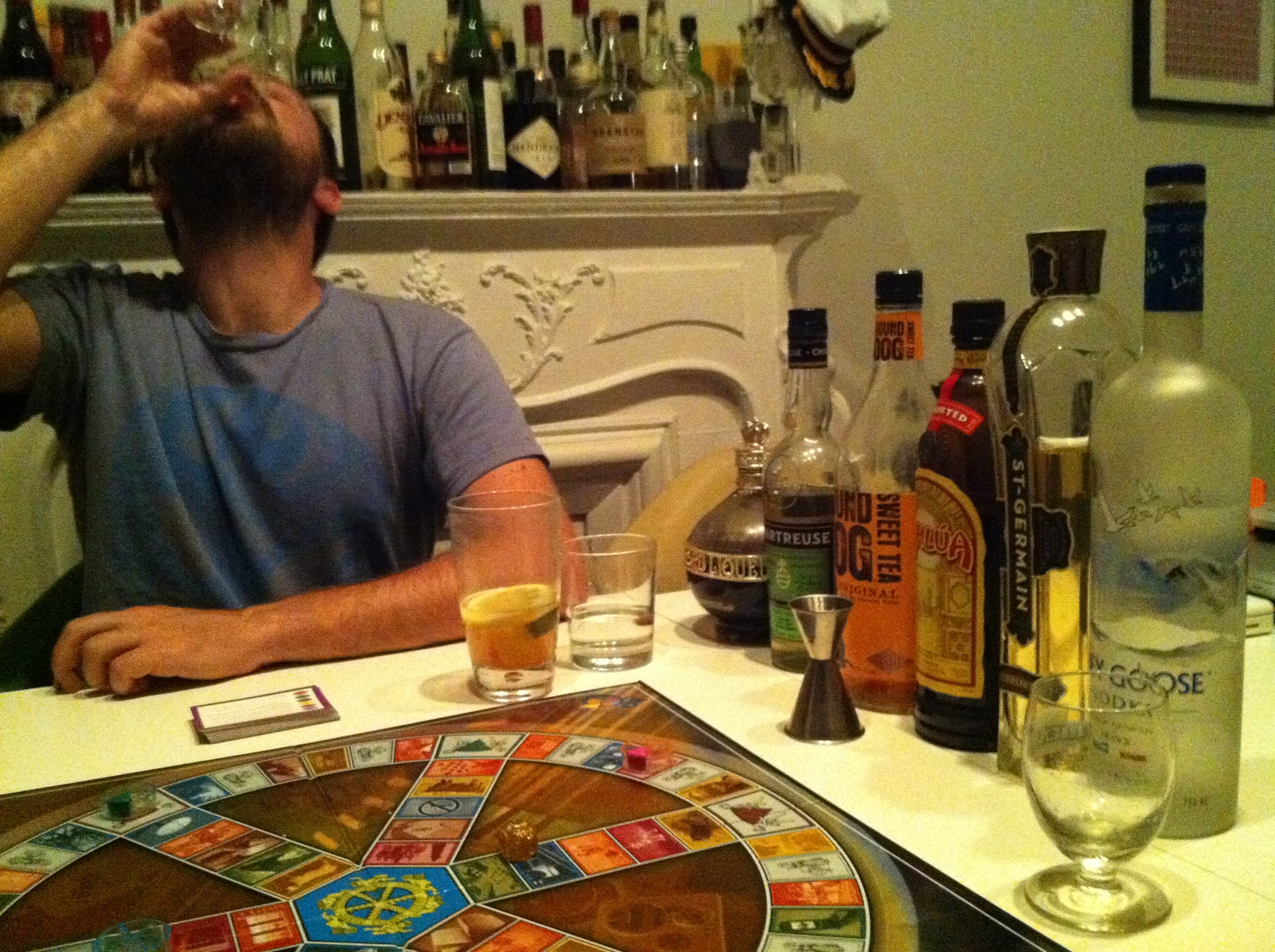
Me and two of my really good friends once decided to play Trivial Pursuit and turn it into a drinking game. We were staying at a friend’s house who had an insane collection of liqueurs and drinks, and we realised there was one for each colour. We started the game with the rule that you had to take a drink every time you got a question wrong - which inevitably led to the downfall of the game.
That’s what I really love about games, and why they feel important to how I think about filmmaking. The problem-solving, the world-bending, the narrative - and, above all, the joy of making something.
I think that’s what filmmaking is, really. You’re just making a game and hoping people want to play. So I think I’d advocate for the idea that filmmakers should all be playing games, and sometimes even making them.
After all, even if you find it doesn’t help at all, at least you’ve had fun. And maybe even beaten, or got to start a particularly pointed argument with, someone you love.