

Join the Revolution
Elif Batuman's portrait of Céline Sciamma and why I keep returning to it
When the pandemic hit and we were all trapped in our houses for a while, I took the opportunity to really dig in and study films and filmmakers. I felt like I’d been so deep in making things that I hadn’t given the space in my practice to learning from others.
So I watched a mountain of films of all sorts to deliberately understand different ways of making. Mini Seasons of Maurice Pialat films, a rewatch of all of Powell & Pressburger’s work, that kind of thing. And I read a lot. I read film books, like the classics I love, but also all kinds of other more unexpected articles and interviews. And ever since, I’ve found it incredibly invigorating to keep that up.
When I hear a filmmaker describe a way of thinking about the world that puts things into place for me with fresh understanding, I feel this giddy mixture of inspired and that what I’m doing suddenly makes sense.
This article, a New Yorker portrait about Céline Sciamma by Elif Batuman is the best example I’ve found in the last couple of years. I’ve read it and re-read it because there’s so much to it. So I thought I’d share parts of it and talk about not only how great a profile it is, but how inspiring and mind-opening I find Sciamma's ideas.
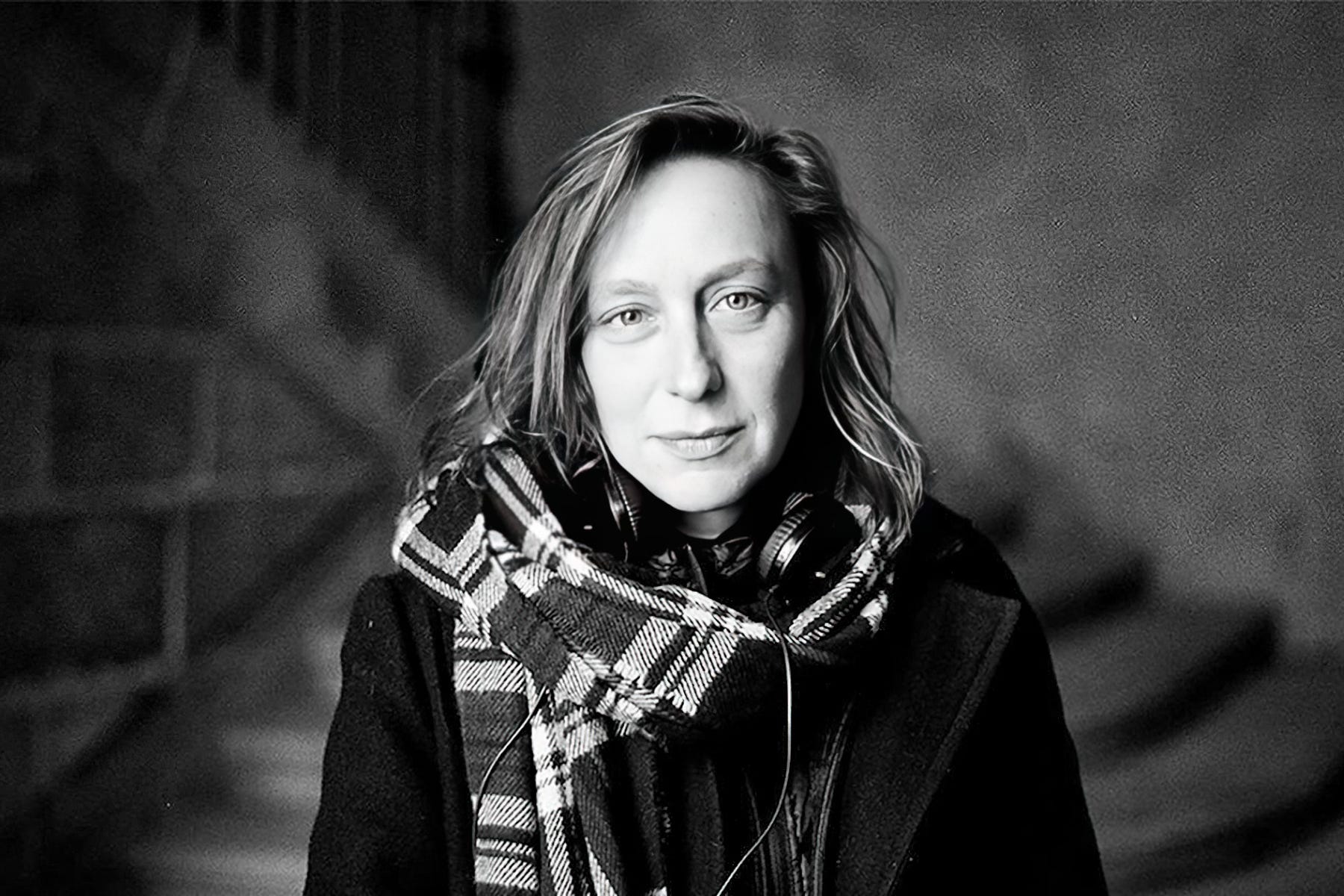
First of all, you can tell it’s written by a brilliant writer. Elif Batuman is an incredible novelist (when is that Sandi Tan adaptation of Batuman’s novel The Idiot coming out??). And she makes the portrait come alive in this observed, non-journalistic way that also gets to some of the bigger ideas that make it such a compelling piece. Beyond the fact that it’s about a filmmaker I love, this is a great example of how to write about and portray a person, thread a narrative, and reveal character. The observational tone places you right there with Sciamma.
She took off her sunglasses, which had small, round tortoiseshell frames. It was confusing weather, sunny but somehow drizzling. We moved under an awning.
See what I mean?
I had asked Sciamma to bring certain materials related to her childhood and her family history. She had brought everything I requested, including childhood photographs—even a studio portrait that showed her as a laughing toddler, with a giant head, wispy hair, and tiny pearl-like teeth. How unguarded she was, in her purple sweater.
She also uses a trick I’ve done in some of my short form work and some of the branded films I’ve made. Asking a subject to bring objects from their childhood, or their home. Giving people something physical to talk about and making them think about what objects they choose to represent themselves with opens up personality in a way that makes it feel less like a press junket.
It’s not every day, I realized, that someone shows you an overabundance of material that you’re actually interested in.
Sciamma’s manner was also unusual, at once relaxed and engaged. There wasn’t anything she didn’t answer or offer to think about. At one point, an older couple at a nearby table was served a gigantic artichoke, and I asked Sciamma if it was normal for artichokes to be that size in France. “No, it’s huge,” she said, briefly glancing over before facing me again, ready for the next question about her grandmothers’ floor plans.
What Sciamma has discovered is a serious, disciplined way of doing what you want. The discipline comes from being strong enough to not do what you don’t want.
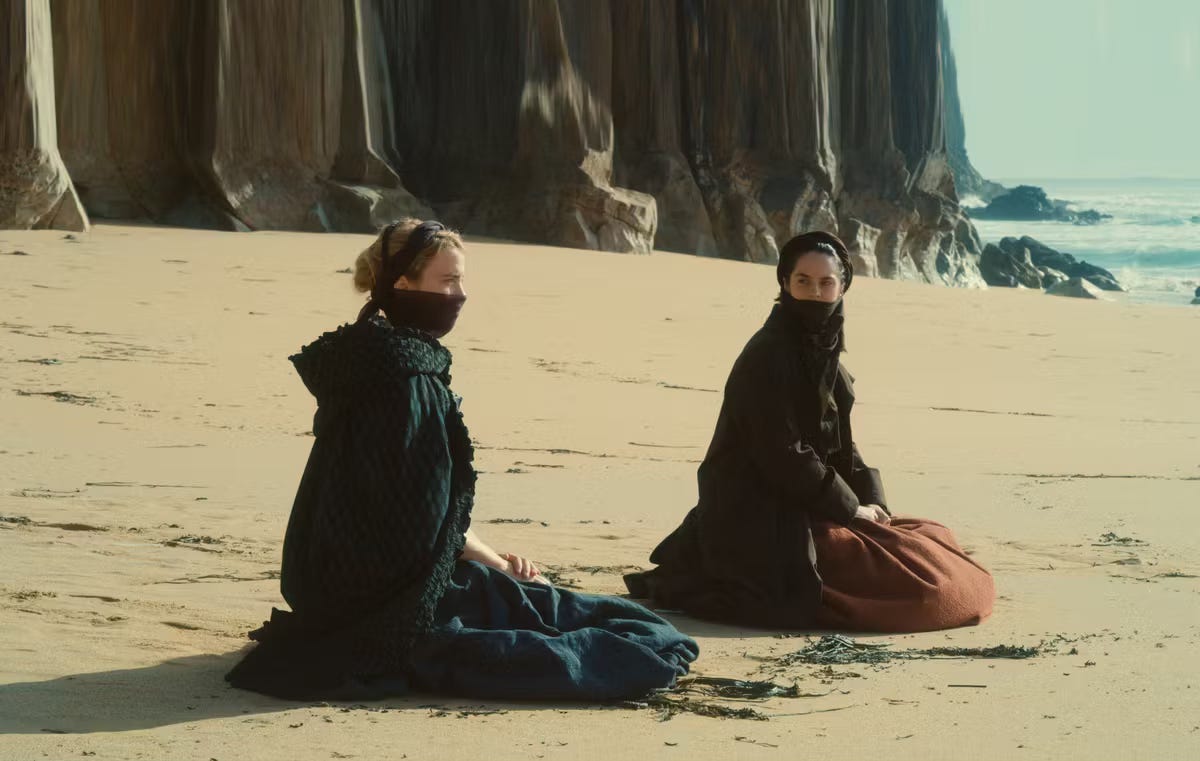
And here's the first beat of the article that really resonates with me and why I return to it. Sciamma is not only talking about her films and her process, the themes and the issues revealed by her films, but she’s talking about the boundary between the work and her life and how for her, that boundary has gone. The work is life and life is the work. And not in the US-centric sense of, ‘I’m gonna work all the time’, but how I live and the work I’m interested in constantly feeding into each other. And to me, embracing that rather than striving for this work-life balance that people talk about is an incredibly inspiring way to be.
I want my life and my films to be one happy mix, with every part of me equally present in both. If I'm browsing in a bookshop, it's research. If I'm on set calling my daughter, it's not an interruption. It's all one thing—work and life feeding each other.
She continues later in the article :
Today, when she thinks about her work, she no longer has two warring thoughts: on the one hand, “Oh I love my job, I’m all about my job, I do my best, I’m so privileged,” and, on the other, “I’m tired, and I never go on holiday, what is my private life?”
“Now I’m, like, ‘No, this is my life! I make films because I like the life that I lead making films.’ It’s all career. It’s not, like, ‘Oh, I’m making films, so I don’t have a wife.’ I make films also to fall in love, because I’m gonna travel, I’m gonna meet people. It’s not like then it has a downside. That’s your life.”
Oh! And, on top of it all, she loves pockets. What kind of wondrous genius doesn’t love pockets? To me, this lifts her into the highest echelon of artists.
Sciamma loves pockets. At one point, I saw her discover, with visible satisfaction, a pocket she hadn’t known about—the tenth—inside the front panel of one of the two layered jackets she was wearing… A committed thrifter, Sciamma does most of her own costume design.
The other thing that makes this inspiring to me beyond her films is her ability to deal with the responsibility she has as a filmmaker and where it meets the world. Read her response here to the idea that one of her films, Girlhood, was actually harmful to causes she believed in.
When asked which of her films looked the most different to her today, she replied without hesitation: “Girlhood.” “It is problematic today,” she said. “Which means it was already problematic at the time.”
It’s so unbelievably refreshing to have someone say I was wrong, that what I thought was right was just plain wrong, and people around me had to tell me that. There’s no defensiveness, there’s no explanation or context. It’s fucking great.
Talking about “Girlhood” now, Sciamma is categorically undefensive: “For me, it’s really simple. If people you consider political allies are telling you, ‘This is not helping the revolution. This is even slowing the revolution,’ then they’re right. That’s it.”
The piece talks through all of her films, and the themes underneath them, the process of making them, the impact they had in the world and on Sciamma.
But it also does get bigger. It talks about much bigger arguments and elements. And I think that it takes a brave filmmaker and writer to hold the breadth of these themes and not reduce them. When she talks about being revolutionary here, not only do I fully believe it, but it makes me want to stand behind her, following her wherever she wants to lead me.
In the past, she had thought of herself as a “reformist,” not a revolutionary. That was her background: “neurotic political optimism on one side, and strong pessimism on the other.”
Someone who can talk like this, be engaged in the world like this, live like this and make films like she does, is the kind of inspiration I think we all need.
Finally, before you should all go and read this article, watch any of her films you haven’t seen, and generally join her revolution… this is just a fantastic line to end on. A sentence that reveals Sciamma’s curiosity and genuine love for the world and its possibilities, and a kind of insight that makes her worldview feel incredibly contemporary and relevant, inspiring and revolutionary.
How lucky we are, Sciamma says, “to have always ahead of us some kind of new excitement, whether it’s a new girl in town or this old lady we didn’t hear about.”
Right there with you. I too remember that immediate thrill of "Oooh, Batuman on Sciamma, yes please!" Thank you for an insightful and encouraging reminder of this wonderful piece.
I just knew you were referring to this article when you gave that little teaser for it!! And it reminded me how I quoted it in one of my first posts, "How to Fall In Love With Cinema." Two of the lines in Sciamma's interview I think about all the time is "if you're not transmitted, then you always have to invent" and “Our culture is at the stage of memories. It’s not at the stage of history. The historical record is so incomplete that it has to be supplemented, even supplanted, by remembered stories. You still have to tell the story. You can’t quote. Not yet.”