

Sizzling to a slow death
On why flashy teasers dominate documentary pitching, and why it's killing the art form.
This is my first post behind the famed paywall.
Some of these posts go a bit deeper about process and specifics and they take me a decent amount of time to put together. So from now on, every other week I’ll share something for subscribers only: more in-depth writing about parts of my filmmaking process and the bits you don’t usually see.
All for less than the price of a beer. I think it’ll be worth it, I hope you do too.
I’ve been cutting a new sizzle reel recently, and it’s reminded me of my absolute hatred of them. Of how much energy goes into these things and how much they distort the real work of making a documentary.
(Yes, some of that hatred is a form of procrastination and self-punishment, but then what part of the process isn’t?)
The sizzle reel has become the default currency of documentary pitching. Everyone asks for one. Everyone expects one. If you don’t have one, the project is discounted as not being a real thing.
It wasn’t always like this. When I started making films you had to write a one or two page document explaining what you were interested in exploring, the possible characters and that was about it. You could then use that document to try and get some development money to do more research and shoot a ‘taster tape’. Some footage with possible characters that would play like scenes.
There was inherent trust that the process of making documentaries was an unknown, and that funders/ investors/ broadcasters where backing you and the exploration.
But now, you need a sizzle for everything. It’s no longer a taster tape. It’s definitely a sizzle.
And for a long doc series, or a giant film, that might make sense. You’re proving a concept for a large financial risk.
With single docs, though, the ask is often smaller. Development money. A modest grant. Or the chance to pitch your project. Enough to get you to the next stage. And yet the sizzle has trickled down, becoming mandatory even there.
The problem is, at this stage, documentaries should be about showing character and giving a sense of how you’ll tell the story. They should feel open, exploratory, full of possibility. Instead, we’re forced to prove we can cut a flashy two-minute trailer.
And what’s crept in with that is the language of stakes and tropes. Almost every reel you see now leans on the same tricks… the crisis looming just out of sight, the struggle against time, a personal crisis framed like a Hollywood act break.
It’s flattening documentaries.
Great documentaries don’t usually build in this way. And great doc projects certainly don’t. Sometimes it’s quieter, slower, stranger. A story unfolding as layers are peeled back. Sometimes the power is not in what will happen, but in who we’re watching and how they move through the world.
I’ve seen reels that are technically perfectly exciting - snappy edits, impossible needle-drop songs, rising tension, a whiff of mystery - and yet they feel utterly detached from what the film could be exploring. Like a performance of the idea of a film, not a glimpse of the film itself.
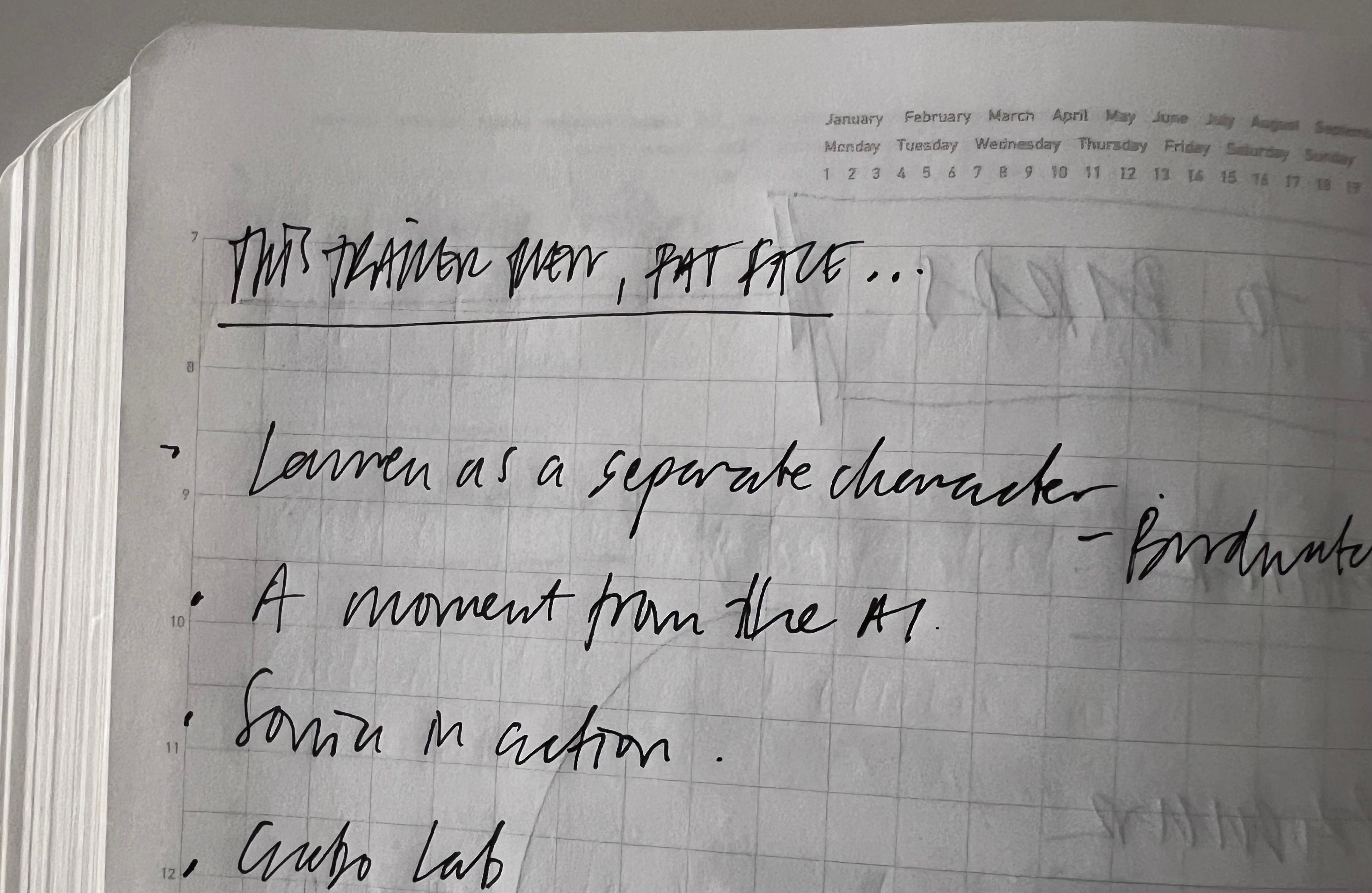
✦ Below the paywall I’ve put the actual notes from the teaser I’m cutting - a bit rambling, a bit revealing, but hopefully insightful and maybe even inspiring too. If you want that level of detail, consider becoming a paid subscriber.
Keep reading with a 7-day free trial
Subscribe to Little Scraps of Filmmaking to keep reading this post and get 7 days of free access to the full post archives.